

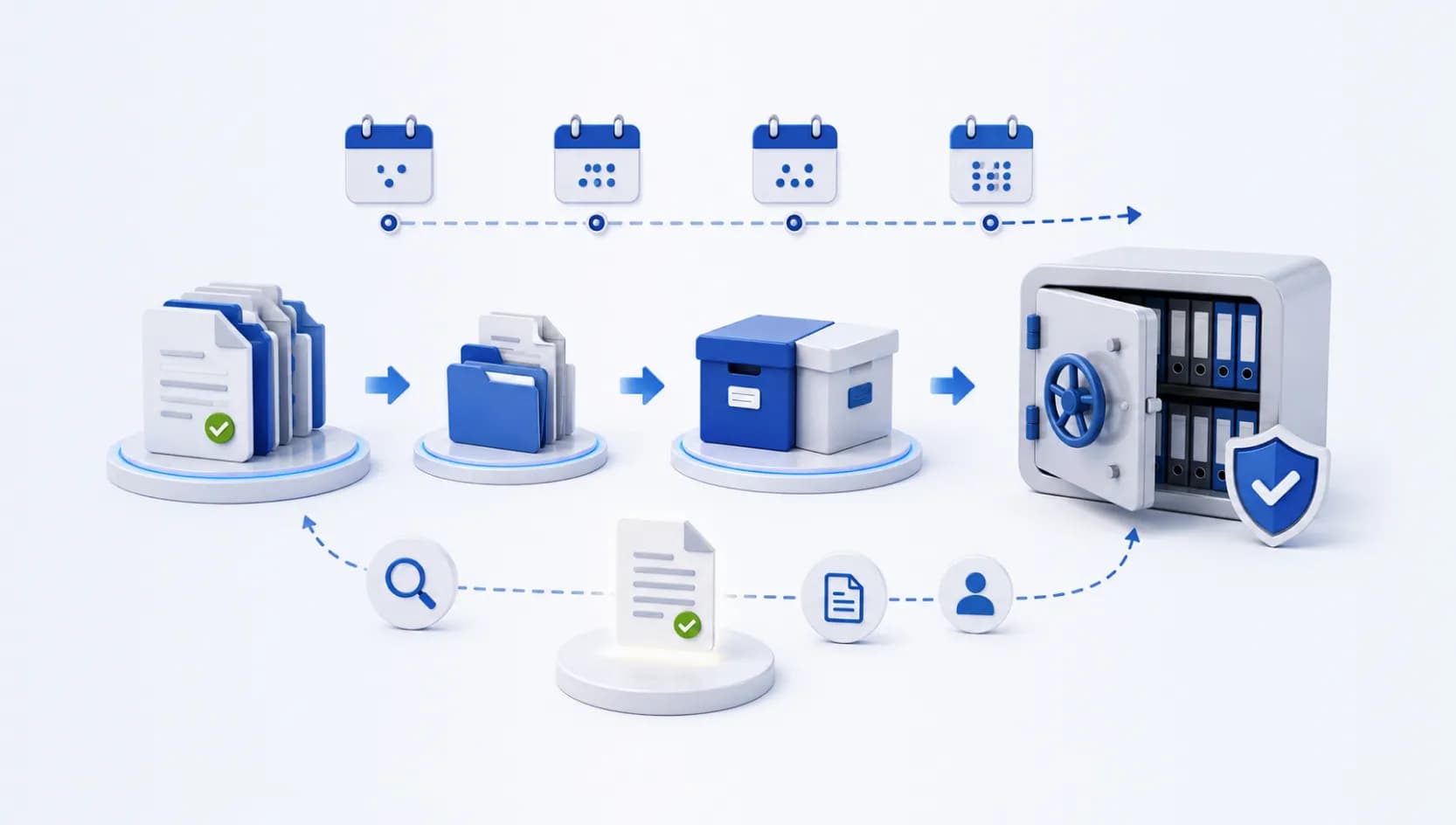
In the life sciences industry, documents rarely lose their value once a process is completed, a batch is released, or a clinical study concludes. In fact, some of the most important records may not be needed until years later when an FDA inspection occurs, a product complaint is investigated, a regulatory submission is reviewed, or a market authorization is challenged.
This reality makes long term document archival one of the most important yet often overlooked components of a compliant quality system.
Many organizations focus heavily on document creation, review, approval, and training. However, the true test of a document management strategy often comes years after a document has been finalized. If a company cannot locate a critical record when regulators request it, the existence of that record becomes almost irrelevant.
Compliance is not simply about creating records. It is about preserving them, protecting them, and retrieving them when needed.
Regulatory Requirements Extend Beyond Document Creation
FDA regulations require life sciences companies to maintain records for defined retention periods depending on the product type, activity, and applicable regulations.
| Industry | Retention Requirement | Key Expectation |
|---|---|---|
| Pharmaceuticals | 1 year after batch expiration | Inspection-ready records |
| Success Metric | Design life + minimum 2 years | Protection against loss or modification |
| Biologics | Extended multi-year retention | Long-term accessibility |
Key Compliance Principle
Records must remain accessible, accurate, complete, and retrievable throughout the entire retention period.
Why Archival Matters During FDA Inspections?
Historical Reviews
Investigators frequently review records created years ago.
CAPA Evidence
Historical investigations must remain traceable.
Training History
Personnel qualification records must be available.
Change Controls
Organizations must reconstruct decisions years later.
Electronic Records Bring New Responsibilities
Part 11 Archival Requirements
Business Risks Extend Beyond Regulatory Compliance
The consequences of poor archival practices extend far beyond inspections.
Historical records play a critical role in investigations, product lifecycle management, technology transfers, validation activities, intellectual property protection, and litigation support.
A manufacturing deviation may require review of records created several years earlier. A customer complaint could trigger an investigation into historical batch documentation. A regulatory submission may depend on data generated during earlier development stages.
Without a reliable archive, organizations risk losing critical institutional knowledge that supports product quality and business continuity.
For rapidly growing life sciences companies, this challenge becomes even greater as the volume of documents increases across departments, facilities, and geographic regions.
The Cost of Manual Archival
Shared Drives
Duplicate records and version confusion.
Physical Storage
Slow retrieval and deterioration risks.
Legacy Systems
Limited visibility and migration challenges.
What an Effective Compliance Archive Looks Like
| Capability | Status |
|---|---|
| Retention Policies | Required |
| Audit Trails | Required |
| Access Controls | Required |
| Rapid Retrieval | Required |
| Searchable Archives | Required |
The Cost of Manual Archival
Shared Drives
Duplicate records and version confusion.
Physical Storage
Slow retrieval and deterioration risks.
Legacy Systems
Limited visibility and migration challenges.
Ready to Secure Your Long-Term Archival Strategy?
Contact the Adrta team today to learn how Zentixs Docs guarantees comprehensive lifecycle security and rapid recall readiness for all historical assets.