

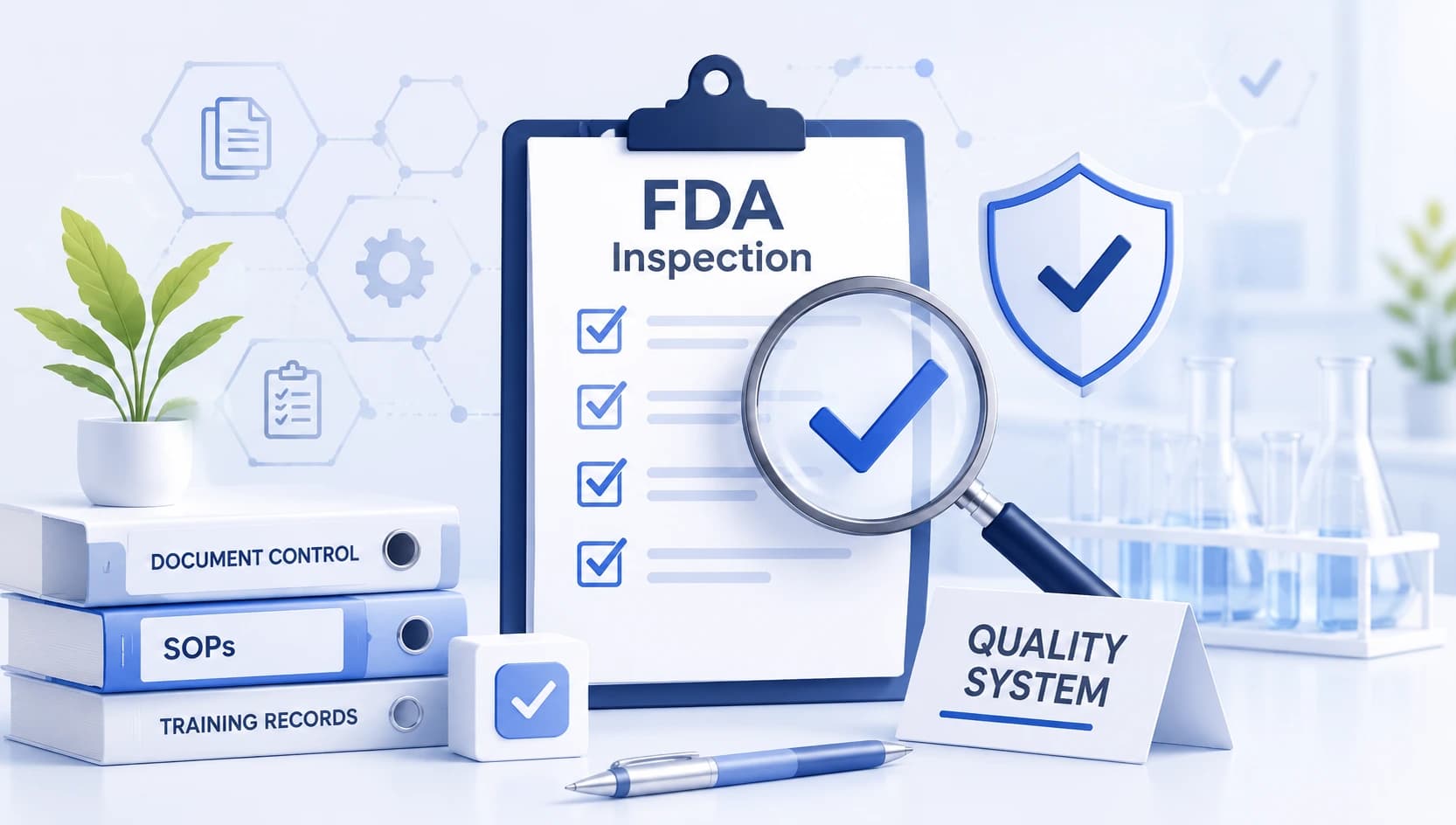
Despite significant investments in quality systems, digital transformation initiatives, and compliance programs, one issue continues to appear in FDA warning letters year after year: document control failures.
From outdated SOPs and missing approvals to poor version control and inaccessible records, documentation-related observations remain among the most common inspection findings in the pharmaceutical industry.
Why do these issues persist — and what can organizations do to prevent them?
1 Document control is more than an administrative task
In regulated environments, documentation serves as evidence that processes were followed, reviewed, approved, and executed correctly.
When an inspector reviews your quality system, they are not simply looking for documents — they are looking for proof that your organization maintains control over its operations.
A well-managed document control process supports:
- Consistent execution of procedures
- Regulatory compliance
- Employee accountability
- Data integrity
- Inspection readiness
When documentation is unreliable, regulators often question the reliability of the processes behind it.
2 The most common document control failures
Outdated documents still in circulation
One of the most frequent compliance gaps occurs when employees continue using superseded procedures after new versions have been approved.
Without a controlled distribution process, different teams may unknowingly follow different versions of the same document, creating inconsistencies and compliance risks.
Missing or incomplete approvals
Documentation should clearly demonstrate who reviewed, approved, and authorized a record.
When approval histories are incomplete — or cannot be produced during an inspection — organizations may struggle to prove that quality processes were properly governed.
Weak version control
Document revisions are inevitable. The challenge is ensuring employees can easily identify the current approved version. Organizations with poor version management often face issues such as:
- Duplicate documents
- Unclear revision histories
- Uncontrolled copies
- Confusion around effective dates
These seemingly issues can have significant regulatory implications.
Slow document retrieval
During inspections, speed matters. Inspectors frequently request SOPs, training records, CAPAs, deviations, and supporting quality documentation. If teams spend hours searching across shared drives, emails, spreadsheets, and filing cabinets, it can create concerns about overall quality system effectiveness.
3 Why these problems continue to exist
Most document control failures are not caused by a lack of regulatory knowledge. Instead, organizations often struggle with operational complexity.
Documentation volumes keep growing
As companies expand products, facilities, suppliers, and clinical activities, documentation requirements grow alongside them. Manual processes that once worked effectively can quickly become difficult to maintain at scale.
Processes remain fragmented
Many organizations still manage SOPs, quality records, approvals, training records, and operational data across multiple systems. This fragmentation makes maintaining consistency significantly more challenging.
Manual workflows create bottlenecks
Paper-based reviews and email-driven approvals often result in:
- Delayed sign-offs
- Lost records
- Missing signatures
- Limited visibility
- Increased administrative burden
Over time, these inefficiencies increase compliance risk.
4 How leading organizations are addressing document control challenges
To improve compliance and inspection readiness, many life sciences organizations are moving toward centralized document management approaches that provide better visibility and governance.
Rather than relying on disconnected repositories and manual approval chains, these systems help organizations maintain controlled workflows, version histories, audit trails, and streamlined document access.
Solutions such as Zentixs Docs support regulated teams by helping manage document lifecycles from creation and review through approval, distribution, revision, and archival, while maintaining the traceability expected in GxP environments.
The objective is not simply digitization — it is establishing a more controlled and inspection-ready documentation process.
5 What FDA inspectors typically expect
While every inspection is different, regulators generally expect organizations to demonstrate four key capabilities.
Controlled documentation
Documents should follow defined processes for creation, review, approval, distribution, revision, and retirement.
Complete traceability
Organizations should be able to show who made changes, when changes occurred, and why revisions were made.
Reliable audit trails
Documentation activities should be transparent and reviewable throughout the record lifecycle.
Immediate accessibility
Critical records should be readily available when requested during inspections or investigations.
When these expectations cannot be met consistently, document control observations often follow.
6 What FDA inspectors typically expect
Organizations looking to strengthen document control should focus on several key areas:
Standardize workflows
Ensure document creation, review, approval, and revision processes follow a consistent framework.
Centralize documentation
Reducing document silos improves visibility and reduces the likelihood of outdated records being used.
Strengthen version management
Employees should always have access to the latest approved version of a document.
Improve accountability
Clear ownership and defined responsibilities help prevent documentation gaps from occurring.
Prioritize accessibility
Documents should be easy to locate during inspections, audits, and routine operations.
7 Conclusion
FDA warning letters continue to cite document control failures because documentation remains the foundation of pharmaceutical compliance.
When records are outdated, approvals are missing, or critical documents cannot be produced quickly, regulators often view it as evidence of broader quality system weaknesses.
As regulatory expectations continue to evolve, organizations that invest in stronger document governance, traceability, and accessibility are better positioned to reduce compliance risk and maintain inspection readiness.
8 How Adrta supports document control excellence
Document control is not just about storing files — it is about maintaining visibility, traceability, and compliance throughout the document lifecycle.
Zentixs Docs, part of the Zentixs Suite from Adrta Technologies, helps life sciences organizations manage controlled documents through structured workflows, version control, approval management, audit trails, and centralized access to critical records.
By helping teams establish stronger document governance practices, Zentixs Docs supports improved inspection readiness, operational consistency, and long-term compliance objectives.
See how modern document control simplifies compliance
Connect with the Adrta team for a personalized walkthrough of Zentixs Docs.