

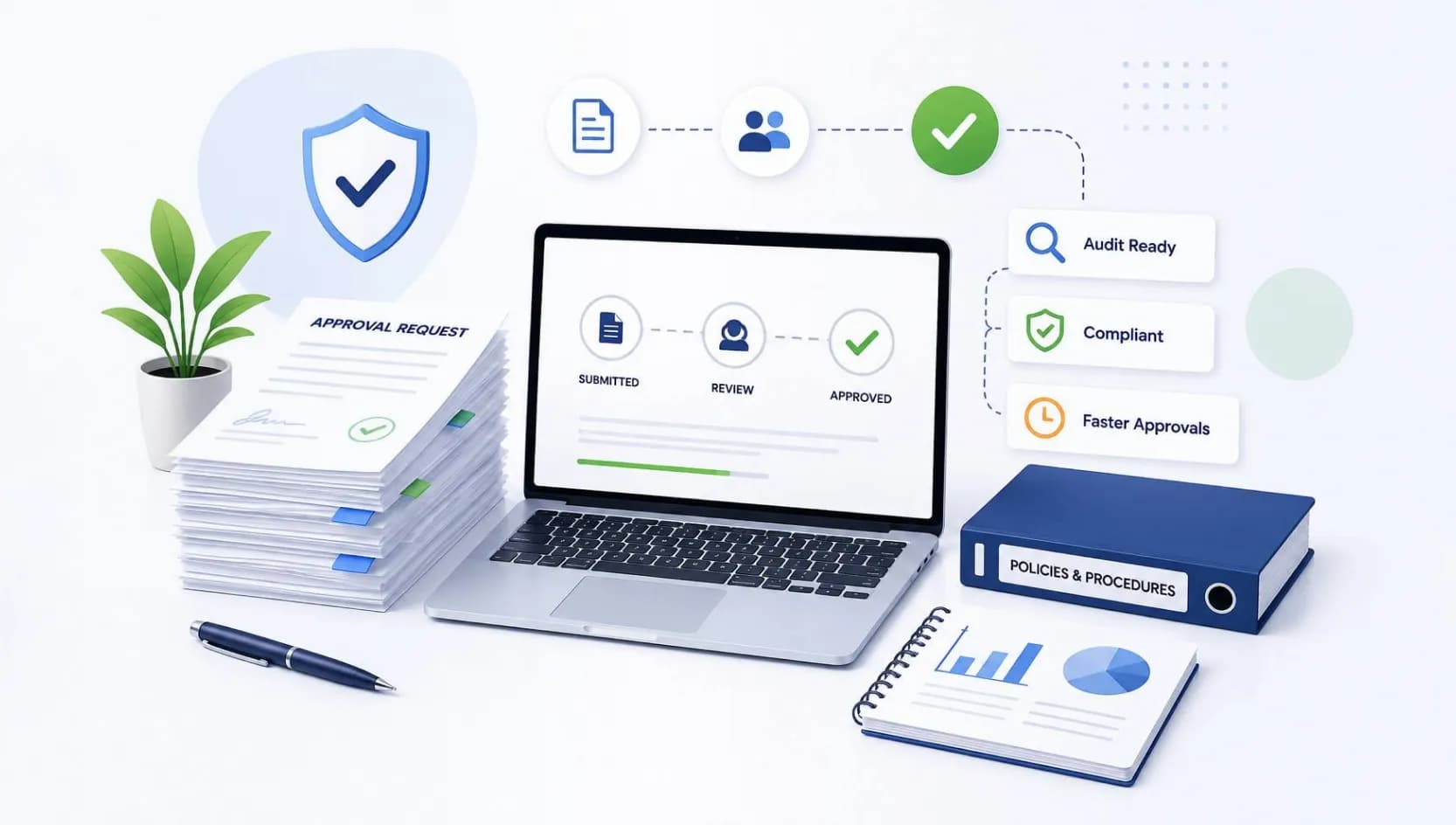
For decades, paper-based approvals were considered the standard method for reviewing, authorizing, and documenting critical activities within life sciences organizations. Standard operating procedures, batch records, quality events, training records, change controls, and validation documents often moved from one desk to another, collecting signatures along the way.
While this approach was once viewed as the safest and most reliable way to maintain compliance, regulatory expectations and operational realities have evolved significantly. Today, many life sciences organizations are discovering that paper-based approval processes can create challenges that extend far beyond inefficiency. In many cases, they have become a genuine compliance risk.
As regulatory agencies continue to emphasize data integrity, traceability, inspection readiness, and effective quality oversight, organizations are increasingly reevaluating whether paper-driven processes can provide the level of control and visibility that modern compliance demands.
The question is no longer whether paper-based approvals can work. The more important question is whether they can consistently support the speed, transparency, and accountability expected in today's regulated environment.
Part 1: Regulatory Expectations Have Changed
Life sciences organizations operate in an environment where regulators expect records to be accurate, complete, attributable, and readily available throughout their lifecycle. These expectations are reflected in global regulations and guidance related to Good Manufacturing Practice, data integrity, electronic records, and quality management systems.
| Compliance Domain | The Paper-Based Risk (Manual Reality) | The Controlled Benchmark |
|---|---|---|
| Visibility & Context | Signatures may be present, but supporting context is not always easy to verify. Documents exist, but determining approval history requires significant manual effort. | Instant Context & Unalterable Audit Trails |
| Traceability & Workflow | Traditional paper workflows struggle to provide the traceability regulators expect. Records must be physically stored, and retrieval during an inspection consumes time. | Centralized Digital Traceability Paths |
| Human Error Controls | Documents can be misplaced, signatures missed, approvals delayed, and outdated versions can inadvertently remain in circulation. | Automated System-Enforced Guardrails |
| Real-Time Monitoring | Quality teams may not know whether documents are awaiting review, pending approval, or delayed within a specific department, creating processing bottlenecks. | Live Routing Pipeline Dashboards |
Part 2: Data Integrity Requires More Than Signatures
One of the most important regulatory trends in recent years has been the increased focus on data integrity. Regulatory agencies continue to emphasize that records must be attributable, accurate, complete, consistent, and available throughout their retention period. Paper-based approvals can satisfy some documentation requirements, but they often create limitations when organizations need to demonstrate comprehensive data integrity.
The Handwritten Signature Limitation
A handwritten signature may confirm that an approval occurred, but it may not provide visibility into the sequence of events leading to that approval. It may not show whether reviews occurred before or after review, nor clearly demonstrate whether the correct version of a document was approved.
The Controlled Electronic System Advantage
In contrast, controlled electronic approval systems can automatically capture timestamps, approval history, version information, user activity, and audit trails. This additional context helps strengthen traceability and provides greater confidence in the integrity of regulated records.
The Hidden Risks of Manual Approval Processes
These risks may appear administrative in nature, but they often have broader compliance implications. An unsigned document, an incomplete approval chain, or the use of an obsolete procedure can trigger audit observations and raise concerns regarding quality system effectiveness. What begins as a document management issue can quickly become a compliance challenge.
Part 3: Compliance Risks Extend Beyond Documentation
When organizations evaluate paper-based approvals, they often focus on administrative inefficiencies such as slower reviews or increased paperwork. However, the broader compliance implications are often more significant:
Investigation & CAPA Delays
Approval delays can impact investigations and CAPAs. Missing signatures can affect document control, limiting critical management oversight.
Inspection Vulnerabilities
During an FDA inspection, the ability to retrieve records quickly significantly influences efficiency. Paper storage makes locating required information time-consuming and resource-intensive.
Weak Control Interconnection
Paper workflows isolate tasks. Because approval processes are not viewed as connected elements, weak tracking limits the maturity of the broader Quality Management System.
Part 4: Visibility & Remote Operational Challenges
Modern quality management requires more than documenting completed activities. Organizations must also monitor trends, assess performance, identify risks, and ensure accountability across quality processes.
The way life sciences companies operate has changed significantly over the past decade. Paper-based processes fall short under these complex operating realities:
-
 Distributed Ecosystem Isolation:
Organizations increasingly manage distributed teams, multiple facilities, global suppliers, and cross-functional approval processes. Paper approvals were designed for environments where reviewers worked within the same physical location.
-
Critical Process Fragmentation:
This challenge becomes particularly significant when approval activities are linked to critical quality processes such as change controls, CAPAs, investigations, training records, and document management.
-
The Operational Reality:
Organizations need approval processes that support collaboration without compromising control. They need secure access to records, consistent workflows, and reliable methods for demonstrating accountability regardless of where employees are located.
The Future of Approvals Is Controlled, Traceable, and Digital
The life sciences industry is moving steadily toward more connected and controlled quality ecosystems. Organizations are targeting approval processes for improvement through specific digital solutions:
Final Thoughts
Paper-based approvals have supported the life sciences industry for many years, but growing regulatory expectations and increasingly complex operations are exposing their limitations. While paper records themselves are not inherently noncompliant, the lack of visibility, traceability, accessibility, and control associated with manual approval processes can create significant compliance risks.
Organizations seeking to improve data integrity, strengthen inspection readiness, and enhance quality oversight are increasingly adopting digital solutions that provide structured workflows and secure electronic approvals. Solutions within the Zentixs Suite, including Zentixs Sign and Zentixs Docs, help organizations manage approvals, documentation, electronic signatures, and controlled records within a connected compliance environment. As regulatory scrutiny continues to evolve, the ability to demonstrate complete, traceable, and efficiently managed approval processes will become an increasingly important component of long-term compliance success.
Want to see how Zentixs supports Part 11 compliance?
Connect with the Adrta team for a personalized walkthrough of audit trails, e-signatures, and access controls built into the Zentixs Suite.