
 All Blogs
Adrta Quality & Compliance Team
•6 min read
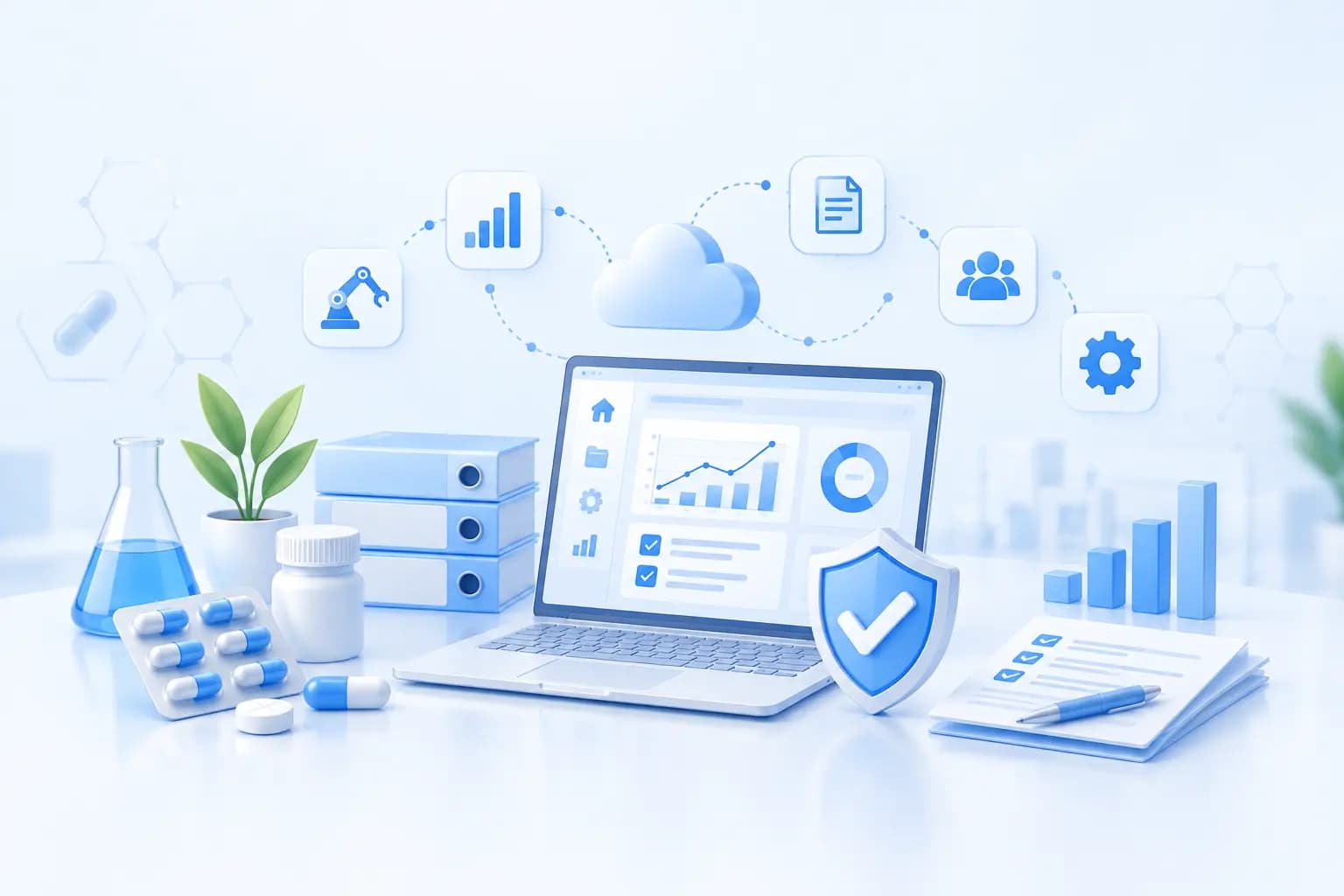
The pharmaceutical industry is undergoing one of its most significant transformations since the introduction of computerized systems. Increasing regulatory expectations, growing data volumes, evolving quality standards, and the demand for operational excellence are driving organizations towards a more connected and intelligent way of working. This transformation is known as Pharma 4.0.
Inspired by the principles of Industry 4.0, it represents the integration of digital technologies, automation, intelligent analytics, and connected business processes across the pharmaceutical value chain. Rather than focusing solely on manufacturing, Pharma 4.0 encompasses quality management, laboratory operations, document control, employee training, equipment management, scientific data, and enterprise-wide collaboration.
Build an environment where data is reliable, processes are efficient, compliance is maintained, and informed decisions can be made using real-time information.
For pharmaceutical organizations, contract research organizations, biotechnology companies, and analytical laboratories, the objective is clear. This article explores the principles of Pharma 4.0, the technologies enabling digital transformation, and the role of integrated pharmaceutical software in creating modern, inspection-ready organizations.
Pharma 4.0 is a framework introduced by the International Society for Pharmaceutical Engineering (ISPE) to support the digital transformation of the pharmaceutical industry. It combines automation, digital technologies, data-driven decision making, and modern quality practices to create connected and intelligent pharmaceutical operations.
Unlike earlier phases of digitalization, Pharma 4.0 is not about implementing individual software applications. It is about creating an integrated digital ecosystem where information flows seamlessly between departments, eliminating disconnected systems and enabling collaboration across the organization.
Whether managing quality events, laboratory samples, controlled documents, employee qualifications, scientific data, or equipment records, every process contributes to a single, reliable source of information that supports compliance and operational excellence.
The pharmaceutical industry has continuously evolved alongside technological advancements. Understanding how operations have shifted provides essential context for adopting modern digital models:
Focused primarily on manual production and traditional manufacturing practices.
Introduced mechanization and automated production equipment to improve efficiency and consistency.
Brought computerized systems, enterprise applications, and electronic records into pharmaceutical organizations.
Extends this evolution by connecting systems, people, equipment, and data through digital platforms that enable intelligent decision making.
The emphasis has shifted from simply collecting electronic data to generating actionable insights that improve product quality, operational performance, regulatory compliance, and business agility.
Modern pharmaceutical organizations face increasingly complex challenges. Global regulatory agencies expect greater transparency, stronger data integrity, comprehensive audit trails, and effective quality oversight. At the same time, organizations must accelerate product development, improve laboratory productivity, manage increasing volumes of scientific data, and maintain operational efficiency.
Paper-based processes, isolated software applications, spreadsheets, and manual approvals often create delays, increase compliance risks, and limit organizational visibility.
Pharma 4.0 addresses these challenges by connecting critical business processes within a unified digital environment. The result is improved collaboration, standardized workflows, faster decision making, and greater confidence in data across the organization.
Several key technology domains form the foundation of a modern Pharma 4.0 ecosystem:
1. Laboratory Management Software:
Modern laboratory management software enables laboratories to standardize workflows, improve traceability, reduce manual data entry, and maintain complete records throughout the sample lifecycle. When integrated with LIMS and SDMS, organizations gain visibility into laboratory operations while improving compliance with GMP and data integrity requirements.
2. Digital Quality Management Systems (QMS):
A modern QMS enables organizations to manage deviations, CAPAs, change control, risk assessments, audits, complaints, supplier quality, and inspection readiness through standardized digital workflows. Replacing manual processes improves consistency, strengthens governance, and provides complete traceability throughout the quality lifecycle.
3. Document & Scientific Data Management:
Controlled documentation forms the backbone of regulated pharmaceutical operations. Document Management Software provides version control, approval workflows, electronic signatures, audit trails, and controlled access. Simultaneously, Scientific Data Management platforms centralize laboratory information, improve data accessibility, and maintain data integrity.
4. Employee Training & Digital Approvals:
Digital Training Management Systems automate assignments, monitor completion status, maintain qualification records, and ensure personnel remain compliant with regulatory requirements. Coupled with 21 CFR Part 11 compliant Electronic Signatures, organizations replace paper approvals without compromising control or traceability.
5. Artificial Intelligence in Pharma 4.0:
Rather than replacing scientific expertise, AI supports better decision making by identifying trends, detecting anomalies, analyzing large datasets, and assisting quality investigations. Applications include predictive maintenance, deviation trend analysis, intelligent document classification, and operational forecasting.
Data integrity remains one of the most critical principles within regulated pharmaceutical environments. The ALCOA Plus principles require data to be attributable, legible, contemporaneous, original, accurate, complete, consistent, enduring, and available. Modern software strengthens data integrity by providing controlled access, audit trails, automated workflows, and secure storage.
SaaS / Cloud Deployment:
Offers rapid scalability, simplified infrastructure management, faster deployment, and automatic software updates.
On-Premises Deployment:
Meets internal governance requirements, infrastructure strategies, or specific customer compliance policies.
Pharma 4.0 represents far more than the adoption of new technologies—it is a strategic approach to creating intelligent, connected, and data-driven pharmaceutical operations. By integrating laboratory management software, QMS, document control, scientific data management, training, and electronic signatures, organizations improve efficiency, strengthen compliance, and enhance data integrity.
Future success will depend on the ability to transform growing volumes of operational and scientific data into actionable business intelligence while maintaining strict regulatory compliance and inspection readiness.
At Adrata Technologies, we believe digital transformation should be practical, scalable, and aligned with regulated life sciences. The Zentixs platform brings together quality, laboratory, compliance, and business processes within a unified digital ecosystem, enabling organizations to build connected operations prepared for the future of Pharma 4.0.