
 All Blogs
Adrta Quality & Compliance Team
•9 min read
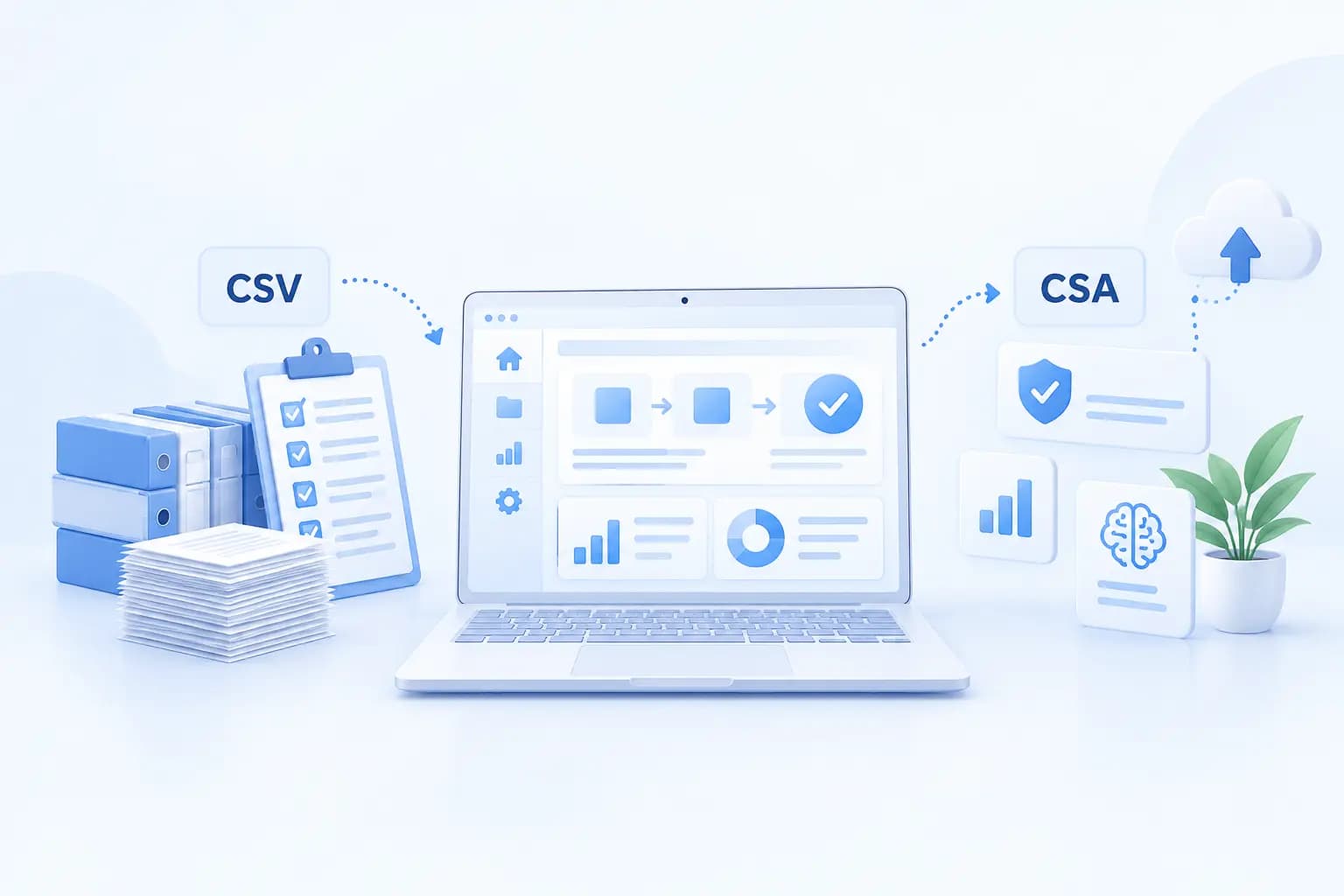
Transitioning from heavy documentation cycles to a critical-thinking, risk-based software assurance model.
CSV focuses on documenting and testing that GxP-regulated software performs as intended, while CSA takes a more risk-based approach to establishing that software is fit for its intended use and maintains product quality and patient safety.
As life sciences organizations increasingly move from paper-based processes to cloud platforms, SaaS applications, automated workflows, and AI-enabled systems, the way computerized systems are assessed and controlled has become increasingly important.
For years, Computer System Validation (CSV) has been a familiar part of GxP compliance. Organizations have used validation activities to demonstrate that computerized systems consistently perform according to their intended requirements.
"CSA encourages organizations to focus their assurance efforts on what matters most: intended use, actual operational risks, and reliable quality outcomes."
More recently, Computer Software Assurance (CSA) has gained attention as a more risk-based approach to assuring software used in production and quality systems. Understanding CSV vs CSA is therefore important for organizations implementing or maintaining GxP-regulated software, particularly as tech stacks evolve.
CSV stands for Computer System Validation. In simple terms, CSV is the documented process of demonstrating that a computerized system consistently does what it is supposed to do.
Imagine a pharmaceutical company implementing a laboratory system to manage testing data. The organization needs confidence that the system performs its intended functions accurately and reliably. It defines requirements, assesses the system, develops test cases, executes testing, documents results, addresses deviations, and approves the system for use.
Traditional CSV approaches often involve formal documentation and predefined validation deliverables: user requirements, functional specifications, risk assessments, test protocols, test results, traceability records, and validation reports. While this maintains a validated state, organizations can sometimes place similar levels of documentation and testing around systems or functions that do not carry the same level of risk.
CSA stands for Computer Software Assurance. It is a risk-based approach to establishing confidence in software used for production and quality system functions.
Instead of treating every software function as requiring the same level of validation effort, CSA encourages organizations to consider what the software is being used for, what could go wrong, and how much assurance is actually necessary.
Non-critical reporting or administrative tools use simpler, efficient assurance activities.
Functions directly affecting product quality or regulated data receive greater scrutiny and formal testing.
The Core Question:
"Have we documented and tested the system sufficiently to demonstrate that it performs as required?"
Focuses heavily on structured, documentation-driven lifecycle deliverables and scripted execution.
The Core Question:
"What does this software do, what could go wrong, and what level of assurance is appropriate for its intended use?"
Emphasizes critical thinking, risk evaluation, and scaled testing appropriate to impact.
Consider a document management system used by a pharmaceutical organization. The system manages document versions, routes approvals, maintains audit trails, controls access, and supports electronic signatures. Not every function presents equal risk.
Under a risk-based approach, the assurance method matches the risk. Evidence can draw from a range of flexible tools:
Scripted testing, unscripted testing, automated testing, supplier documentation reviews, system configuration audits, and data reviews.
Cloud and SaaS applications share infrastructure, updates, and maintenance responsibilities with the vendor. Rather than re-validating vendor-managed baseline code, CSA guides life sciences teams to focus assurance efforts on critical configurations, access controls, electronic signatures, and data flows.
When AI tools enter GxP environments, risk profiles change. Traditional software follows strict deterministic logic, whereas AI models process, summarize, or classify data dynamically. Risk-based assurance evaluates not just if the software runs, but whether outputs, limitations, and operational boundaries are properly controlled.
Whether navigating traditional CSV requirements or modern CSA risk strategies, the goal remains unchanged: ensuring software suitability, data integrity, and product safety. The Zentixs platform is architected with built-in compliance workflows to help life sciences organizations transition seamlessly to modern assurance frameworks.