

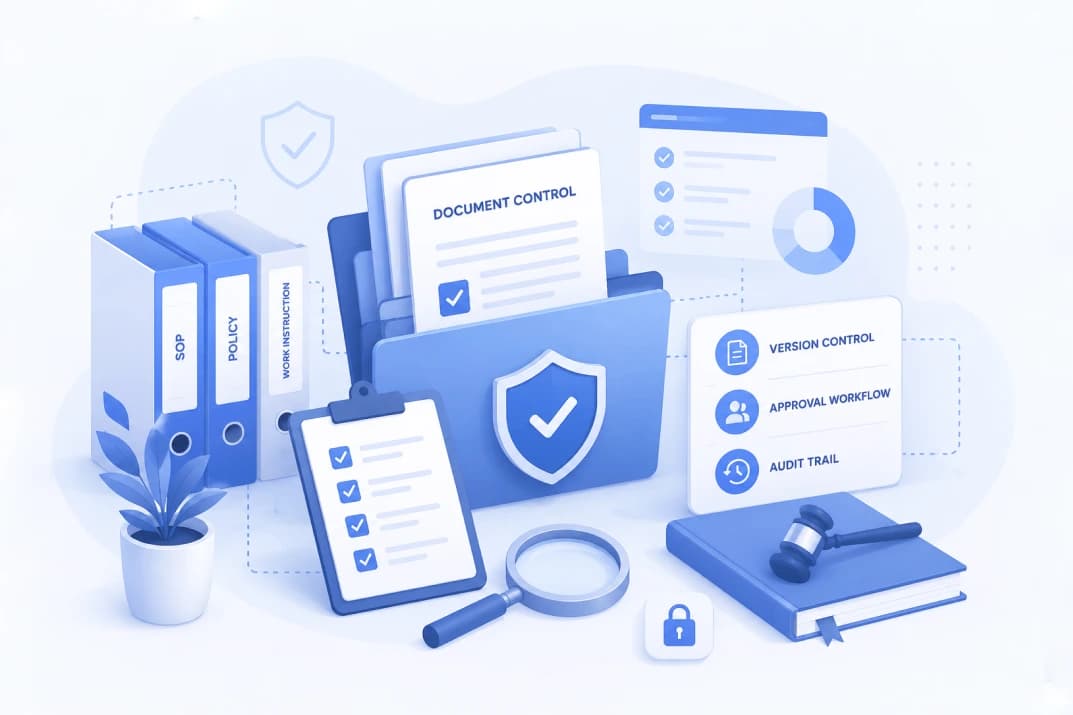
When FDA investigators audit a life sciences organization, one of the primary windows into the health of the entire operation is the document control system. Document control is not an isolated administrative task; it is the structural framework that ensures procedures are uniform, data is trustworthy, and operations remain compliant.
Despite its critical importance, document control issues continue to be among the most common observations cited in recent FDA warning letters and Form 483s across pharmaceutical, biotechnology, and medical device manufacturers.
When document integrity breaks down, the entire quality infrastructure begins to fracture. Investigators do not view document control failures as mere clerical mistakes. Instead, they interpret them as indicators of a lack of overall quality oversight, missing operational discipline, and heightened data integrity vulnerability.
Most Frequent Audit Cites
Understanding where organizations frequently struggle allows quality leaders to identify internal gaps proactively, implement systemic remediation, and reinforce inspection readiness long before an auditor walks through the doors.
The Critical Document Vulnerability Matrix
| Failure Vector | Regulatory Consequence | Risk Threshold |
|---|---|---|
| Version Control |
Operators execute manufacturing sequences using superseded SOP parameters instead of updated system values. | High Exposure |
| Approval Trails |
Procedures or validation documents enter active production environments without authentic, dated approvals. | Incomplete |
| Audit Integrity |
Inability to reconstruct document lifecycles or trace exact engineering adjustments over execution windows. | Critical Breach |
Uncontrolled Documents in Production
One of the most frequent observations involves the presence of unauthorized, unapproved, or unofficial documents on the shop floor or in laboratory environments.
Investigators regularly locate hand-written logs, photocopied post-it notes outlining custom sequence tasks, unofficial spreadsheets tracking calibration data, or unvalidated forms used to collect records. These temporary workarounds undermine procedural uniformity and create substantial data integrity challenges.
Poor Version Control Metrics
When a standard procedure gets updated, legacy documents must be promptly removed, cataloged, and securely archived across the organizational ecosystem.
A breakdown here occurs when outdated, superseded versions of documents remain accessible in operational units. When employees accidentally execute procedures using retired thresholds, it compromises batch consistency, invalidates testing parameters, and triggers serious compliance gaps.
Inadequate or Incomplete Approval Trails
Before any document changes lifecycle stages to become active, it must satisfy strict signature authorizations confirming thorough quality and management verification.
Inspectors routinely identify documents missing essential signatures, signatures lacking accompanying dates, or procedures fast-tracked into production without quality assurance approval. In paper-based or hybrid systems, signature collection delays often lead teams to execute tasks using pending or unauthorized drafts.
4. Missing or Broken Audit Trails
In digital environments, tracking the lifecycle history of an asset is a paramount regulatory concern. Failures materialize when hybrid architectures allow changes without capturing who initiated the modification, when the change happened, or why it was made. If an investigator cannot cleanly trace a document's historical timeline from creation to active status, the data integrity of the ecosystem is at risk.
5. Disconnect with Training Configurations
A document change should never exist in a vacuum; it must instantly trigger relevant downstream quality actions across your team. A frequent inspection gap is an approved procedure change where operators are never trained on the modifications. Executing an operation based on an active document version when training records reflect a legacy version defaults the system into non-compliance.
6. Inconsistent Change Control Alignment
Document updates should happen through formal change control protocols to ensure modifications don't create unintended upstream or downstream problems.
Inspectors look for documentation updates executed independently of change control paths, changes that lack a scientific or technical rationale, or updates implemented prior to formal change verification. Without a structured linkage between change control logs and actual document states, tracking real system logic becomes nearly impossible for audit teams.
7. Inability to Rapidly Locate and Retrieve Records
During high-stakes regulatory audits, time is an important variable. When inspectors request specific validation protocols, historical batch records, or old procedure iterations, long delays immediately attract negative attention. In environments reliant on decentralized physical storage or disjointed network folders, finding specific assets can become an unorganized and stressful scavenger hunt that dampens regulatory confidence. A document that exists but cannot be retrieved within a reasonable timeframe signals a lack of system control.
Moving from Vulnerability to Total Structural Control
Most document control failures don't originate from employee negligence; they stem from the limitations of manual, fragmented, or hybrid document management tracking strategies. Paper structures wear down and rely on physical movement across sites, while disconnected local hard drives lack automated version protections and audit trails.
Transitioning to digital architecture solves these structural vulnerabilities. Continuous inspection readiness is achieved when compliance is baked directly into your daily software workflows, not managed as a stressful end-of-year milestone.
Solutions like Zentixs Docs within the broader Zentixs Suite help eliminate document management bottlenecks by uniting automated version workflows, robust audit logging, electronic validation signatures, and linked employee training profiles within a secure, compliance-ready repository.
Secure Your Document Infrastructure Against Inspection Pitfalls
Contact the Adrta quality team today to see how the Zentixs Platform can replace loose manual document loops with centralized validation workflows and instant audit query readiness.